
MeloClash - Music Quiz
MeloClashMusic
0.00.00 Reviews
- Version
- v3.2
- Installs
- 50.00K
- Age Rating
- Everyone
Screenshots
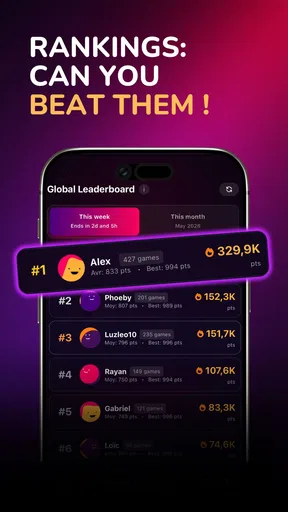
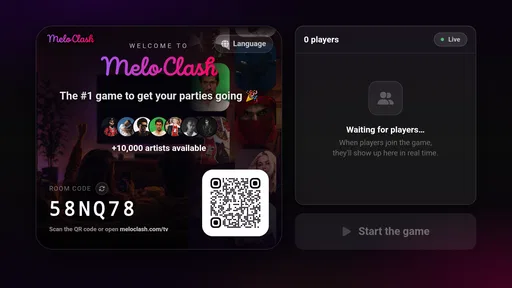
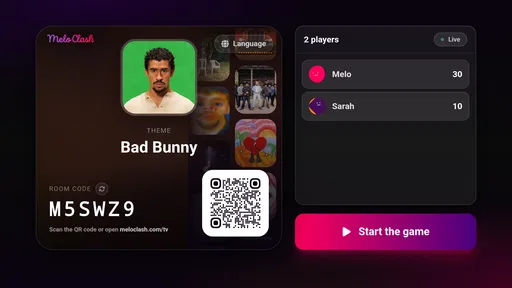
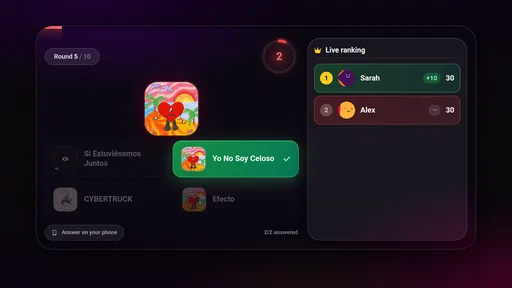
Our Review of MeloClash - Music Quiz
 Analysis by Appyee
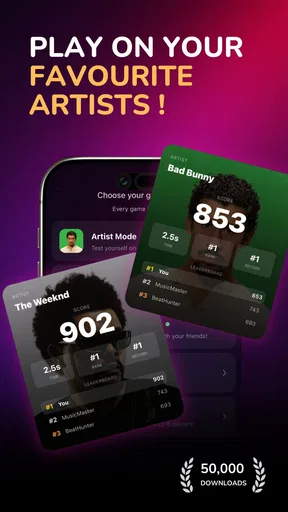
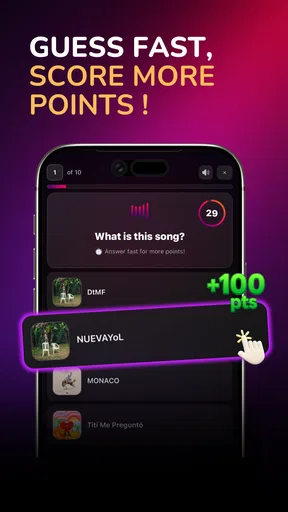
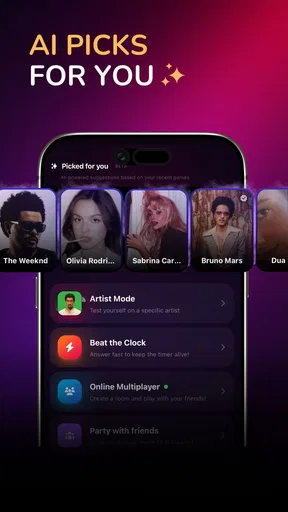
I went into MeloClash expecting a simple music quiz, and that is exactly where its appeal begins. This free music game from MeloClash turns song recognition into a quick online challenge built around artists you already know. Instead of asking you to study rules or learn a complicated control system, it puts your listening memory first: hear a clue, identify the song or artist, and decide before your confidence disappears.
That simplicity makes it easy to recommend for casual play, but it also creates a clear limit. This is not a replacement for a full music-streaming service, a serious trivia platform, or a tool for discovering obscure recordings in depth. I found it most enjoyable when I treated it as a social warm-up, a short break, or a way to test how well I really know the artists I claim to love.
How a normal MeloClash session feels
The baseline workflow is refreshingly direct. I open the game, start a round, listen carefully, and make my best identification. The important skill is not simply recognizing a familiar chorus. The useful clues may come from the voice, production style, opening seconds, rhythm, or the particular period of an artist’s career. That makes each answer feel more satisfying when I reach it before the obvious part arrives.
Because the game is online, the experience suits short sessions rather than long, uninterrupted campaigns. I can imagine using it while waiting for a friend, passing time before a film starts, or adding it to a relaxed evening where everyone takes turns naming songs. The free entry point helps here: there is no need to commit money before discovering whether the format matches your taste.
The game is rated Everyone, so it is an approachable choice for mixed-age households and general music fans. That rating does not automatically mean every round will suit every listener’s taste, of course; music knowledge is personal, and a player who mostly listens to one scene may find some challenges much easier than others. Still, the presentation is aimed at broad participation rather than a niche expert audience.
My first practical tip is to avoid answering from the first vague association that appears in your head. I found it better to separate three thoughts: the performer’s voice, the song’s arrangement, and the era or style it suggests. If two artists sound plausible, that small pause can prevent a confident but careless guess. The game rewards recognition, but it also rewards disciplined listening.
A second useful habit is to treat wrong answers as information rather than simply lost points or lost pride. When I miss a song, I try to identify what fooled me. Was it the vocal tone, a familiar instrumental pattern, or a track that reminded me of another hit? That turns a quick round into a lightweight listening exercise. Over time, the most valuable improvement is often not knowing more songs, but noticing why a particular clue led me in the wrong direction.
Who gets the most from the format
This game is a natural fit for people who already enjoy testing friends on music. It works especially well when one person is the group’s unofficial playlist expert and everyone else wants a fair way to challenge that reputation. It can also suit someone who wants a low-pressure mental break without learning a new fictional world, managing a large collection, or following a long story.
It is less convincing for players who need a deep progression system, extensive customization, or a large solo adventure. The core pleasure comes from recognition itself. If you dislike music quizzes because they make you feel that your knowledge is being judged, the online format may not change that reaction. Likewise, listeners who want precise control over what they hear may prefer a streaming app, where they can choose albums and playlists instead of responding to a challenge.
A realistic everyday use case is a small gathering where everyone has a different musical background. Rather than letting the most knowledgeable person control the playlist, I would use the game in short turns and let each player explain how they reached an answer. One person may recognize a singer instantly, another may know the rhythm but not the title, and a third may remember the song from a completely different context. That conversation is part of the fun, and it makes the game more social than simply playing alone with headphones.
Settings and preparation that actually matter
Experienced use begins before the first guess. I recommend checking the available in-game settings and controls when you first install it, even if the default setup appears obvious. The goal is not to hunt for secret advantages; it is to remove avoidable friction. Make sure the sound is comfortable, notifications are not interrupting your attention, and your device is ready for an online session.
Audio deserves special attention. A music quiz is unusually sensitive to weak volume, noisy surroundings, or a speaker that makes vocals difficult to distinguish. I get more from the game with headphones or a quiet room, especially when the clue depends on a brief introduction rather than a famous lyric. Playing beside a loud television can make a knowledge problem look like a technical problem.
It is also worth checking how you prefer to hold the phone before starting a serious session. A stable grip makes quick choices easier, while a crowded screen or awkward reach can cause an accidental tap. I would not spend time changing settings repeatedly during a round. The better workflow is to set up once, then keep attention on the audio.
Since the game is online, connection quality can affect the rhythm of play. I prefer beginning a session when my connection is steady rather than treating it as an offline activity. This matters most when playing with other people: a delay or interruption can make a fair challenge feel confusing. The game’s low-friction format is strongest when the technical side stays invisible.
The current version is v3.2, and it runs on Android devices using version 6.0 or later. That makes it accessible to many older phones, although compatibility on paper does not guarantee that every device will feel equally comfortable for audio-focused play. On a smaller or older handset, I would pay particular attention to speaker clarity, responsiveness, and whether background apps are competing for the connection.
There is another setting-related trade-off that is easy to overlook: volume and environment change the perceived difficulty. A song recognized instantly through good headphones may become surprisingly hard in a busy room. If you are comparing scores with friends, try to keep the listening conditions similar. Otherwise, you may be measuring who had the clearest audio rather than who knew the music best.
Faster patterns for better guesses
Speed matters in a blind test, but rushing is not the same as playing efficiently. My preferred pattern is to listen for the broad identity first, then narrow it down. I ask myself whether the clue points toward a particular singer, band, genre, or production era. Only after that do I search my memory for the exact title. This reduces the number of random guesses and helps when several songs share a similar mood.
Another effective pattern is to build a mental shortlist instead of forcing an immediate answer. If the opening suggests two possible artists, hold both possibilities for a moment and listen for the detail that separates them. A vocal texture, a drum sound, or a familiar phrasing choice can be more reliable than the overall feeling. This is especially helpful with popular artists whose songs use recognizable but repeated stylistic elements.
I also recommend changing your attention between rounds. During one clue, focus on the singer. During the next, listen to the arrangement or the opening structure. This prevents the ear from locking onto one type of evidence. It is a small adjustment, but it makes the quiz feel less like a memory lottery and more like active listening.
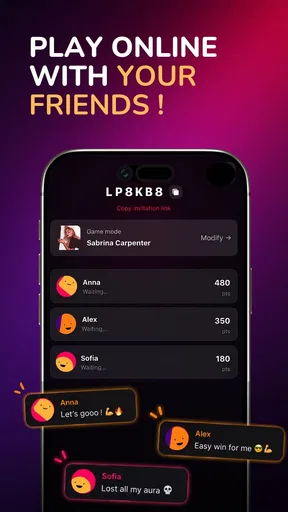
For group play, establish a simple answer routine before starting. One person can read or announce the final choice while everyone else keeps quiet until the response is locked in. Without that rule, the loudest player may influence everyone else, and the game becomes a test of confidence rather than recognition. The routine also makes repeat sessions fairer when players have different levels of musical knowledge.
When I want to improve rather than merely win, I keep a mental list of recurring blind spots. Perhaps I identify an artist but confuse their earlier and later songs. Perhaps I know the chorus but not the title. Perhaps I recognize a cover or collaboration but forget the main performer. These are different problems, and each suggests a different listening habit. The game does not need a formal study plan to support this kind of self-coaching.
That is one of the less obvious strengths of this format: it can reveal the difference between familiarity and recall. I may know a song well when it appears in a playlist, yet struggle when the context is removed. That gap is useful to notice. It tells me whether I remember the sound itself or simply rely on the surrounding playlist, album artwork, or the previous track.
Where the experience has limits
The biggest limitation is also the game’s defining feature: the content is organized around recognizing songs from artists. That is excellent if your listening habits line up with the available challenges, but less satisfying if you want a carefully curated journey through a particular genre, decade, country, or album history. A streaming service is better for deliberate exploration, while a traditional trivia app may be better for questions about lyrics, music history, instruments, or theory.
There is also a difference between a blind test and a full music game. A blind test measures instant recognition, not how deeply you understand an artist. Someone can know an artist’s albums, influences, and career in detail yet miss a short audio clue. Conversely, a player with strong exposure to popular tracks may perform well without having much broader knowledge. I appreciate that distinction because it keeps the result in perspective.
The game is free to download, with optional in-app items priced from $3.49 to $17.99 each. That means the basic barrier to trying it is low, but anyone who becomes a regular player should pay attention before confirming a purchase. For me, the sensible approach is to enjoy the free experience first and decide whether any optional content genuinely improves the way I play. A purchase should solve a real preference, not simply follow the excitement of a close round.
I would also avoid judging the game after only one session. Music quizzes can feel brilliant when the clues match your library and frustrating when they do not. A better test is to play at different times, with different people, and with a wider range of listening habits. If the challenge remains enjoyable even when you are not winning, the format is probably a good fit.
Players who expect a fully predictable difficulty curve may need to adjust their expectations. Recognition is personal, so one round can feel effortless while the next exposes a gap in your memory. I see that variation as part of the appeal, but it can be irritating if you want every challenge to be calibrated around your exact skill level. In that case, a more structured quiz platform may provide a clearer sense of progression.
Privacy and attention are practical considerations too. An online music game works best when you are willing to give it focused listening time. If you are trying to play while working, traveling through a noisy place, or constantly switching between apps, the experience loses much of its point. I would choose it for a deliberate short break, not as background entertainment while doing something that already demands concentration.
My verdict after settling into the habit
After using it as both a solo challenge and a group activity, I see MeloClash as a compact music game with a clear purpose. It does not try to be a streaming library or an encyclopedic music course. Instead, it asks a straightforward question: how quickly can you connect a sound with the artist and song stored in your memory?
That focus is why I would recommend it to casual music fans, playlist enthusiasts, and groups looking for an easy activity that needs almost no explanation. The free price makes experimentation simple, the Everyone rating keeps it broadly approachable, and the Android requirement of version 6.0 or later means it is not restricted to only the newest devices. MeloClash has also passed 50 thousand installs, which suggests that the format has found an audience without needing a complicated pitch.
I would skip it if my main goal were discovering new music in a controlled way, learning formal music knowledge, or playing a deep competitive game with extensive systems. In those situations, a streaming app, specialist trivia product, or more feature-heavy music game would serve me better. The optional purchases are another reason to keep expectations realistic: the core appeal should already work for you before you consider spending anything.
My final advice is to use good audio, play in short focused sessions, and treat mistakes as clues about your listening habits. Keep group answers organized, avoid letting one confident player lead everyone else, and do not confuse fast recognition with complete musical expertise. Those small habits make the experience fairer and more rewarding.
For me, the best description is a quick test of musical memory that becomes more enjoyable when played deliberately. MeloClash is not trying to replace the apps where I listen to music; it gives me a different reason to pay attention to it. If that sounds like the kind of challenge you would enjoy sharing with friends or fitting into a spare moment, it is worth trying.
Verdict
Strengths of MeloClash - Music Quiz
- Quick rounds make it easy to play during short breaks.
- Covers a wide range of songs and artists for varied challenges.
- Competitive scoring adds excitement when playing with friends.
- Simple controls make the quiz accessible to casual players.
- Music recognition skills improve as you learn recurring clues.
Limitations of MeloClash - Music Quiz
- Some song categories may feel repetitive after extended play.
- A stable internet connection may be needed for all features.
- Music knowledge can create a steep gap between players.
- Ads may interrupt the experience for free users.
- Less familiar tracks can make certain rounds feel overly difficult.
Similar Picks in This Category
View All
Tiles Hop Music & Ball Game
AMANOTES PTE. LTD.4.3

Magic Tiles 3™ - Piano Game
AMANOTES PTE. LTD.4.6

Real Piano
Bilkon3.7

Piano Game: Classic Music Song
Dream Tiles Piano Game Studio4.0

Smash Colors: Music Ball Rush
BADSNOWBALL HONGKONG LIMITED4.2

Piano Music Go-EDM Piano Games
Joy Journey Music Games4.5
Frequently Asked Questions
What is MeloClash - Music Quiz, and how does it work?
MeloClash - Music Quiz is a music-trivia game built around recognizing songs, artists, and musical styles. After starting a round, you listen to short audio clips or review music-related prompts and choose the correct answer from the available options. The game is designed for quick sessions, making it suitable for casual play, friendly competition, and testing how well you know popular music.
Can I play MeloClash - Music Quiz alone or with other players?
The game is intended to make music quizzes more competitive by allowing players to challenge themselves and, depending on the available mode, compete against friends or other participants. Solo play is useful for practicing your recognition skills, while multiplayer-style challenges add pressure because you must answer quickly and accurately. Check the current in-game options after installation, as modes and matchmaking features may change.
Does MeloClash - Music Quiz require an internet connection?
An internet connection may be needed for features such as loading quiz content, synchronizing progress, accessing online challenges, viewing rankings, or competing with other players. Some basic content might remain available temporarily after it has loaded, but you should not assume that every mode works offline. For the smoothest experience, use a stable Wi-Fi or mobile-data connection and keep the app updated.
Is MeloClash - Music Quiz free to download and does it include purchases or advertisements?
MeloClash - Music Quiz may be available as a free download, but the exact business model can include advertising, optional in-app purchases, premium content, or limitations on how many rounds can be played without waiting. Before downloading, review the listing for your Android or iOS device and check the purchase information. This is especially important if children will use the app or if you want an uninterrupted experience.
Is MeloClash - Music Quiz suitable for children and all music fans?
The game can be enjoyable for many ages because its core gameplay is based on identifying music, but suitability depends on the songs, artwork, advertisements, chat functions, and online interactions included in the current version. Parents should review the store age rating and privacy information before installation. Players should also remember that the quiz may focus more heavily on certain genres, languages, or popular artists than others.
Play our best games!


